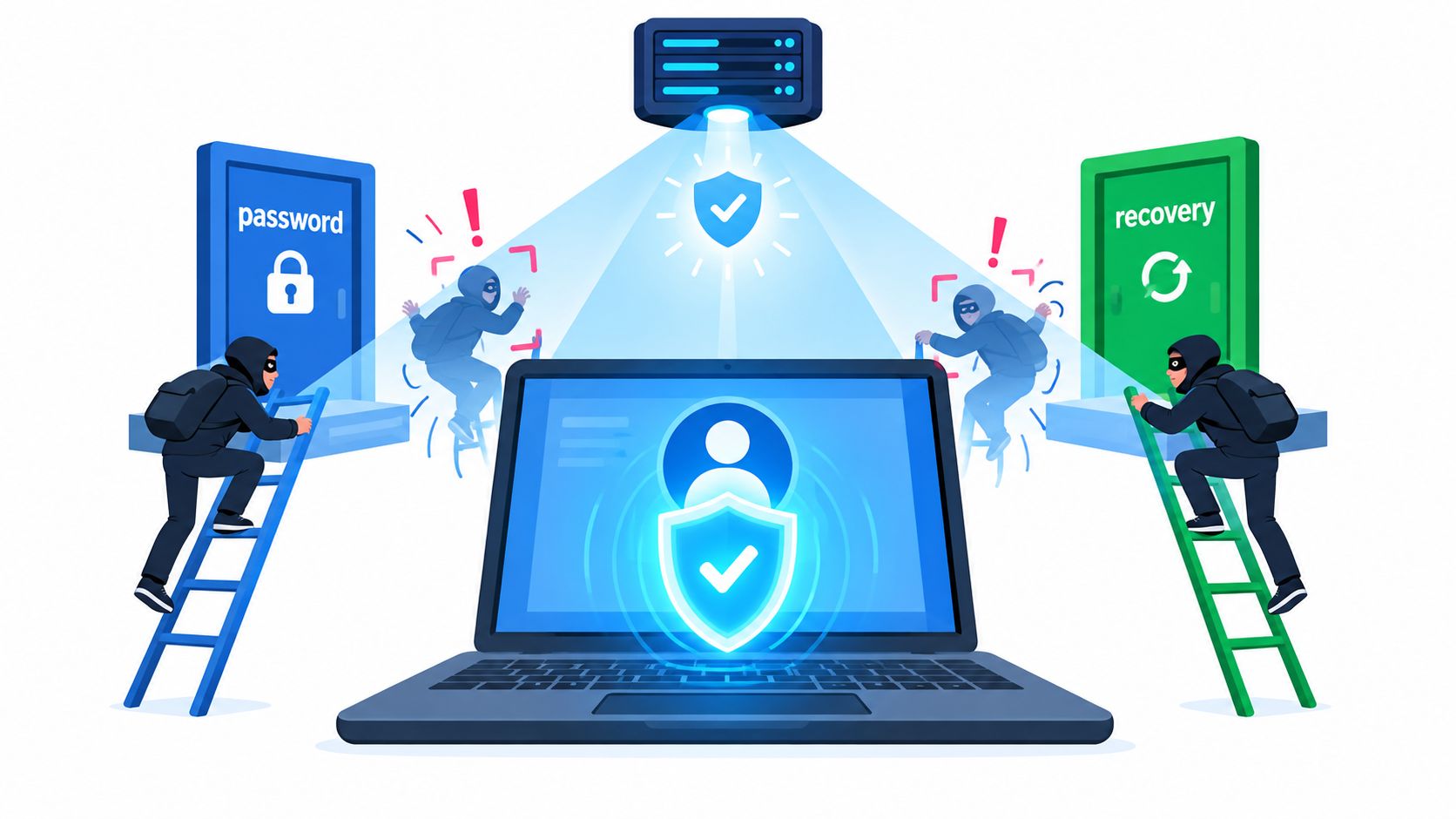
A customer signs in from a familiar device, passes MFA, and starts a checkout. Minutes later, the recovery email changes, a new browser appears in the session list, and an order is submitted against a stored payment method. The login succeeded, but the account has still been taken over.
That distinction matters. Account takeover fraud is a lifecycle problem, not only a password problem. Attackers may begin with stolen credentials, then move through sessions, recovery controls, profile settings, APIs, and payment workflows. Defenders need to protect the actions that create value for an attacker, not just the screen where the user enters a password.
Table of Contents
- Why Account Takeover Has Outgrown Credential Stuffing
- The Account Takeover Lifecycle and Where Defenses Break
- Common Account Takeover Vectors and Detection Signals
- Server-Verified Browser Protection for High-Value Actions
- Integrating Observe Mode Before Enforcement
- Building a Defense That Spans Login Through Monetization
Why Account Takeover Has Outgrown Credential Stuffing
The scale is already too large to treat account takeover as an isolated login nuisance. Industry reporting cited by the Federal Reserve on account takeover fraud puts U.S. losses at more than $15.6 billion in 2024, up from $12.7 billion in 2023. Suspicious Activity Reports tied to account takeover also rose by more than 36% in 2024 compared with 2023, making the problem visible in regulated financial activity as well as in application logs.
A typical incident starts with credential stuffing, which is the automated testing of stolen username and password combinations against other services. But the attacker's objective rarely ends at authentication. Once access works, the attacker can alter recovery details, register a new device, export personal data, change a payout destination, place an order, or use the account to attack other users.
One industry trend report found that ATO attacks increased 24% year over year in 2024, while earlier consumer research reported a 250% increase from 2019 to 2020. Those figures appear in industry account takeover statistics from SpyCloud, and the operational lesson is more important than the individual trend line: attackers can industrialize access when organizations protect credentials more carefully than they protect authenticated actions.
The real asset is authenticated authority
An authenticated session is an authority container. It may grant access to money, customer records, saved payment methods, internal messages, support functions, or administrative operations. A session cookie, refresh token, API token, or recovery link can therefore be more valuable than the original password.
This is why a password reset policy can't compensate for weak post-login controls. A user can authenticate legitimately, complete MFA, and still lose control when an attacker steals the session or manipulates a recovery route.
Practical rule: Treat every high-impact account action as a fresh authorization decision, even when the request follows a successful login.
The consumer reach is broad as well. Public survey-based estimates cited by the Federal Reserve place the share of U.S. adults who have experienced account takeover at roughly 22% to 25%, representing tens of millions of people. That combination of consumer prevalence, financial loss, and rising report volume makes account takeover fraud a core application security concern for banks, SaaS companies, marketplaces, retailers, and any service that stores valuable identity or payment data.
The Account Takeover Lifecycle and Where Defenses Break
Account takeover fraud usually follows a sequence with three operational phases: initial access, control expansion, and monetization. Each phase produces different evidence, and each can bypass a defense designed for an earlier point in the sequence.
At initial access, criminals obtain credentials through phishing, malware, data breaches, purchased lists, or social engineering. Credential stuffing then tests those credentials at scale. If the victim reuses a password, the attacker may authenticate without exploiting a software vulnerability.
The FBI's Internet Crime Complaint Center reported that, since January 2025, it received more than 5,100 account takeover fraud complaints with losses exceeding $262 million, as described in its public service announcement on ATO fraud. The concentration of harm in transfers, payments, payroll changes, and account modifications shows why a successful login is only an early event, not the final security boundary.
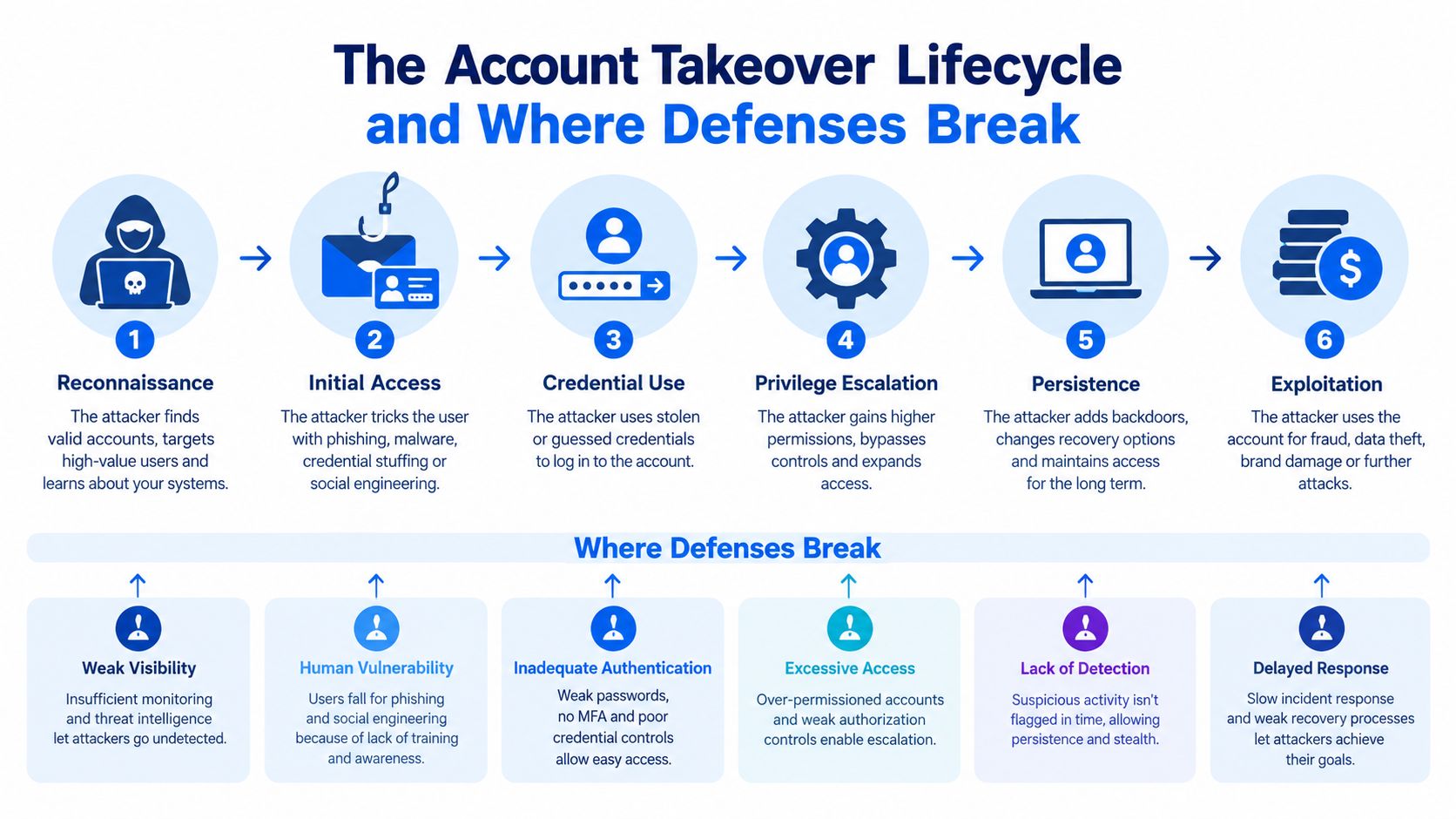
Three phases, six failure points
During control expansion, the attacker looks for ways to make access durable. They may add an email address, change a phone number, create an API key, enroll a device, weaken MFA through a fallback path, or use account recovery to replace the legitimate owner's contact details. These operations often receive less scrutiny than login attempts, even though they change who can control the account later.
Session hijacking creates a different failure mode. Proofpoint describes adversary-in-the-middle attacks in which an attacker steals a session cookie and imports it into another browser. The attacker can then use the authenticated session without entering the password again or passing MFA, as explained in Proofpoint's analysis of stolen session cookies.
| Phase | Attacker Action | Defense Gap |
|---|---|---|
| Discovery | Collect credentials, session artifacts, or recovery information | Password controls don't address stolen sessions or data obtained elsewhere |
| Initial access | Authenticate with a valid username and password | A valid login can look legitimate to a perimeter-only control |
| MFA and fallback | Use phishing, downgrade paths, or weaker recovery options | MFA may protect the primary path while fallback remains exposed |
| Session control | Steal or replay an authenticated cookie or token | Password policies can't invalidate authority already granted |
| Account modification | Change profile, recovery, device, or API settings | Many applications treat profile changes as low-risk operations |
| Monetization | Transfer funds, alter payroll, extract data, or place orders | Login telemetry alone won't explain the business impact |
Why conventional controls stall
MFA raises the cost of many attacks, but it doesn't automatically protect recovery or session handling. The FIDO Alliance guidance on passkeys and phishing also warns that passkey deployments can retain exposure when password-based registration or recovery remains available.
The engineering requirement is straightforward: attach risk decisions to the complete operation. A password check answers whether credentials were accepted. It doesn't answer whether this browser should change the payout account, whether this session should submit a large order, or whether a recovery request follows a credible history of account ownership.
Common Account Takeover Vectors and Detection Signals
Different attack paths leave different traces. A useful detection program correlates authentication, browser, session, recovery, profile, and transaction events instead of asking whether one login looked normal.
Credential stuffing is the clearest example. Sift reported that 78% of individuals use the same password for more than one account, and its global network saw ATO attack rates rise from 2.9% to 3.6% in Q2 2024 compared with Q2 2023, a 24% increase. The same Sift account takeover report reported consumer victimization at 24% in that period. For defenders, repeated attempts against many accounts, one credential set appearing across unrelated users, and unusual velocity from a browser or automation cluster are stronger signals than a failed password alone.
Match the vector to the evidence
Phishing produces credential submissions from an unexpected origin and often a short delay before access from a different environment. Adversary-in-the-middle attacks produce a harder problem: the victim may complete MFA successfully, while the attacker reuses a stolen session artifact. Look for session continuity violations, browser or device changes, abrupt geography shifts, and sensitive actions that don't fit the established session.
Recovery abuse deserves its own policy. A password reset followed immediately by a new device, changed email address, disabled notifications, and a payment change is not equivalent to an ordinary forgotten-password event. Require stronger assurance for recovery changes than for routine profile edits, and delay or separately verify actions that create durable control.
FinCEN guidance identifies several practical post-login indicators, including unusual ATM activity, clustered ACH transactions across different geographies, sudden wire transfers, and profile changes. These signals are valuable because they describe what happens after the attacker gains control, rather than focusing only on how the attacker entered.
| Control | Protects well | Fails or creates trade-offs |
|---|---|---|
| CAPTCHA | Some automated, low-cost form abuse | Adds friction, can be outsourced or solved, and doesn't validate a later session |
| MFA | Many password-based login attacks | Doesn't by itself stop stolen sessions, weak recovery, or post-login abuse |
| Browser verification | Automated browser abuse around selected actions | Must be verified server-side and combined with account and transaction context |
| Transaction monitoring | Transfers, payouts, orders, and other monetization events | Can react after risk appears and may generate false positives without good context |
For teams comparing approaches, the anti-bot verification guidance from MANDATE is useful as a starting point for separating automated request screening from identity assurance. No single row in the table replaces the others. The right design places controls at the points where an attacker creates durable access or financial value.
Server-Verified Browser Protection for High-Value Actions
Browser verification is most useful when it protects a defined action, not when it becomes a vague trust score attached to every request. A signup, login submission, recovery request, checkout, payout change, or administrative mutation can each have a different tolerance for automation and friction.
MANDATE provides invisible browser verification for important website actions without CAPTCHAs. The browser collects proof on the client, hosted verification libraries validate that proof on the server, and the application can use the result to allow, flag, or block a request. Legitimate users don't need to solve a puzzle as part of the normal path.
Place verification where the decision is made
A practical integration sequence looks like this:
Identify the business action. Start with the route or method that changes account control or creates financial value. Don't begin by placing the same policy on every endpoint.
Collect browser proof in the client. The application gathers evidence as part of the normal browser request flow. The proof should support the intended operation, rather than act as a permanent identity label.
Verify on the server. The server checks the evidence before it accepts the high-value action. This keeps the decision outside the browser, where an attacker can inspect or modify client-side behavior.
Choose the enforcement point. MANDATE can integrate at the edge through a CDN or serverless function, within cloud infrastructure, or around application middleware. The best location is close enough to the protected operation to see relevant context without breaking legitimate service clients, callbacks, or webhooks.
Tune before blocking. Observe the proposed decision against real traffic, then introduce enforcement after the team understands which callers and outcomes it affects.
Server-verified browser proof reduces exposure to token theft and replay attempts by tying acceptance to fresh, verified evidence rather than relying on static credentials or tokens. That distinction matters after an attacker has copied a request, stolen a session artifact, or moved a payload outside the environment that originally produced it.
MANDATE's model also treats opaque proof as a reference to server-side state, rather than as a permanent trust label. The server can cross-reference replay markers and session continuity when it makes the decision. That doesn't make an application unbypassable, and it doesn't replace account-level risk analysis, but it gives engineering teams a control aimed at automated and replayed requests instead of another password challenge.
The research on why browser proof needs server state explains the architectural reason for keeping acceptance logic on the server. The dashboard and enforcement controls then give teams a place to inspect events and adjust policy as traffic changes.
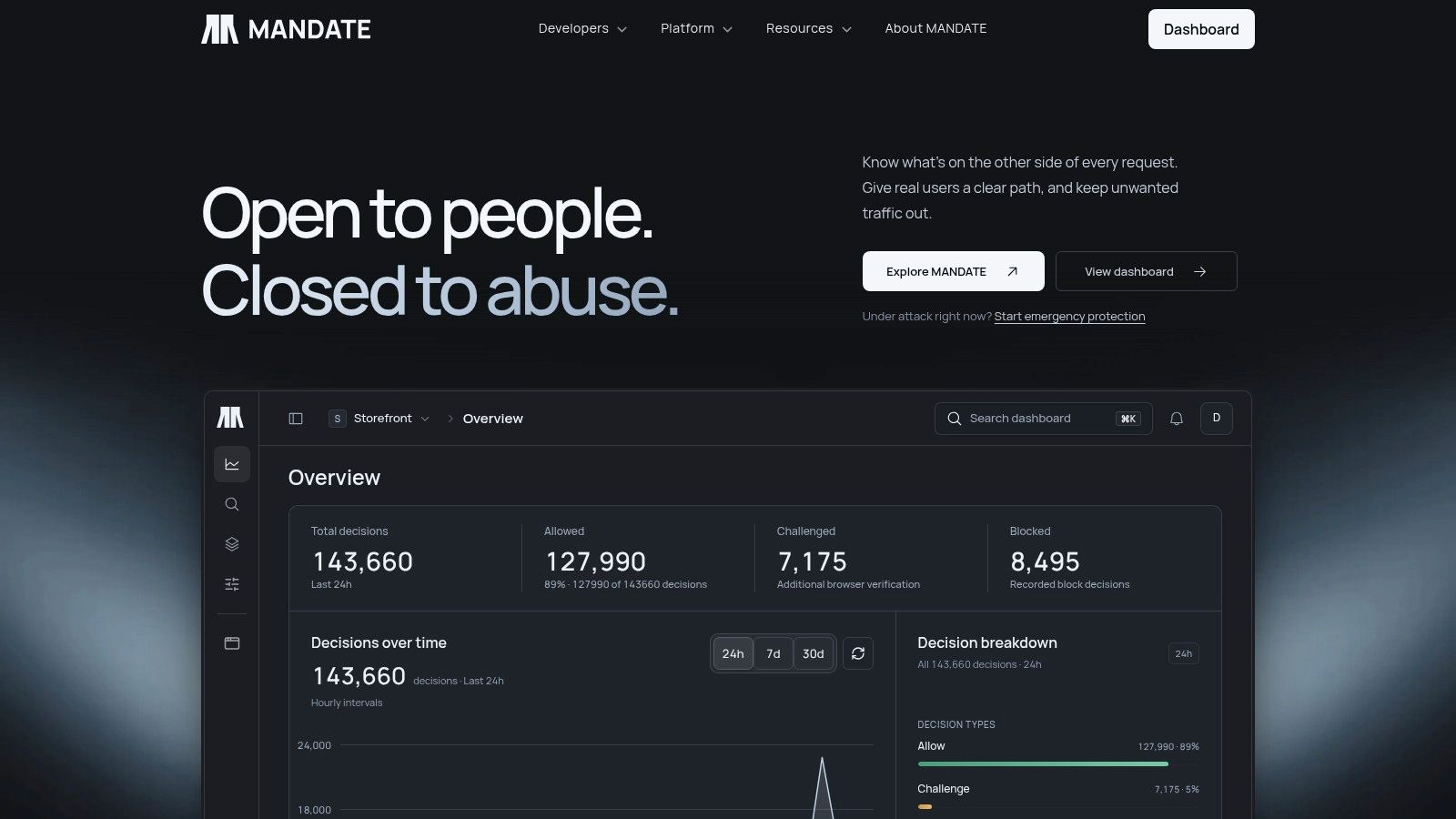
A browser proof layer is not a substitute for MFA, recovery assurance, or transaction monitoring. It is most effective when the application uses it at the boundary where an automated or replayed request would otherwise become an accepted operation.
Integrating Observe Mode Before Enforcement
A proposed security decision isn't an enforced decision. Teams often confuse an integration event with a successful business outcome, then block traffic based on incomplete evidence.
A verification call proves that application code ran. It doesn't prove that the intended account signed in, that the order was stored, or that a transfer completed. Measure those outcomes separately.
Start with one action and its real callers
Choose one route with a clear security and business meaning. Sign-in, account creation, order submission, or a payout change is easier to evaluate than an entire API surface.
Inventory every caller before changing behavior. One router may serve a browser, a mobile client, a service integration, a webhook, and an internal callback. Those callers may need different evidence, and a broad rule can break a legitimate machine-to-machine flow while leaving the actual browser abuse untouched.
Define the event that means the operation completed. For sign-in, that might be a session issued after all required checks. For checkout, it might be an order persisted and associated with the authenticated account. For recovery, it might be a verified change to the recovery address, not merely a reset form submission.
Measure completions, not requests. A high verification volume can coexist with low successful sign-in or order completion if the application fails later in the pipeline.
During Observe mode, keep proposed outcomes separate from operational failures. A useful review distinguishes:
- Proposed rejections: Requests that would have been denied under the new policy.
- Verification errors: Requests where proof was missing, invalid, expired, or could not be checked.
- Applied interventions: Requests that were flagged, delayed, or blocked by an active control.
- Business failures: Requests that passed security checks but failed because of inventory, payment, validation, or application errors.
The Observe before enforce guidance from MANDATE reflects this separation. It helps teams tune a rule against actual traffic instead of treating every denied proposal as prevented fraud or every successful verification as a completed customer operation.
Distinguish retries from replay
Legitimate users retry because a network request timed out, a payment page refreshed, or a browser resumed after interruption. Replay attacks repeat evidence or payloads outside the intended request context. The distinction requires correlation with operation identifiers, session continuity, timing, account history, and whether the original action completed.
A retry after a failed network call may be safe to process idempotently. A second submission with stale proof after the original order completed may need rejection or review. Protecting request integrity helps establish whether a request is fresh and valid, while operation recovery determines what the application should do when the customer isn't sure whether the first attempt succeeded.
That division prevents a common mistake: using fraud controls to solve an application-state problem. Security telemetry should inform the decision, but the application still needs idempotency, clear operation status, and safe recovery for legitimate failures.
Building a Defense That Spans Login Through Monetization
A durable account takeover program assigns a control to each stage of the account lifecycle. Password hygiene and breached-credential detection help at authentication. MFA strengthens the primary login path. Browser verification can screen automated abuse at selected actions. Session management limits the lifetime and scope of authority. Recovery assurance protects the route attackers use when they can't win directly. Transaction monitoring identifies monetization after access is established.
The controls have different trade-offs, so avoid measuring them with one number. A password rule may reduce weak credentials while increasing reset volume. MFA can stop many automated logins while creating recovery pressure. Edge verification can reduce scripted traffic without adding a puzzle, but it won't identify every compromised legitimate session. Transaction rules can protect a payout while delaying a real customer whose behavior changed for a valid reason.
Tie protection to completed outcomes
The most useful operating metrics describe business results and customer impact:
- Completed legitimate operations: Count successful sign-ins, stored orders, recovery completions, and approved transfers, not only incoming requests.
- False-positive cost: Review legitimate customers who were challenged, delayed, flagged, or denied.
- Protected transaction cost: Understand the infrastructure, review, and support effort required for each protected high-value operation.
- Control coverage: Map which controls protect login, recovery, profile changes, checkout, payouts, and APIs.
- Incident reconstruction quality: Confirm that logs connect the browser, account, session, decision, and resulting business operation.
Start with one router or method. Establish a baseline in Observe mode, compare proposed decisions with completed operations, and expand only after the team understands the exceptions. A policy that protects the whole account surface from the first deployment often protects nothing well because its callers, business outcomes, and failure modes are still mixed together.
Recovery deserves particular attention. Require stronger evidence for changing the recovery address, adding a new payout destination, issuing an API credential, or removing a security factor than for viewing a profile. Add notifications, step-up verification, transaction holds, or manual review where the action creates durable control or moves money.
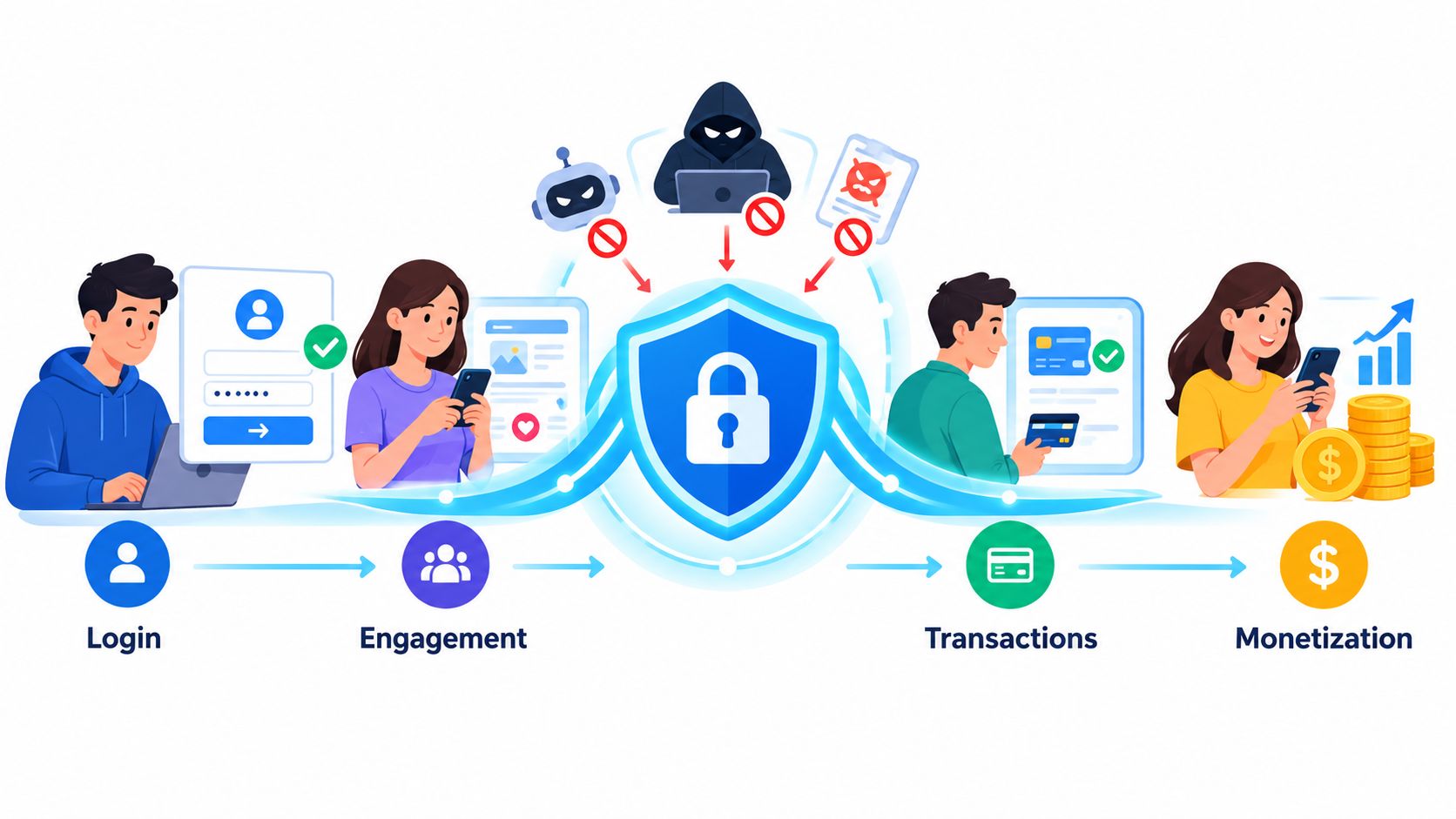
Design for the attacker's next action. If a control blocks the login but leaves recovery, session export, or payout changes weak, the attacker will use the weaker path.
The strongest architecture is layered and explicit. Detect suspicious credentials at login, validate browser context at high-value web actions, monitor unusual post-login behavior, and require meaningful identity assurance for recovery. Review the entire chain regularly because attackers don't need to defeat every control. They only need one path from initial access to monetization.
MANDATE provides invisible, server-verified browser verification for signups, logins, checkouts, recovery actions, and other high-value website operations without CAPTCHAs. Use MANDATE to evaluate protection in Observe mode first, then tune enforcement around the actions where automated abuse and replay create the greatest account takeover risk.